
Dry Eye & Eye Allergy Care
Dr Nor Diyana provides assessment and treatment for dry eyes and allergic eye conditions at Pantai Hospital Klang, Selangor. Care focuses on identifying the underlying cause, relieving discomfort and supporting the health of your eye surface.

When Should You Have Your Eyes Assessed?
What Does the Assessment Include?
Your assessment begins with a discussion of your symptoms, current eye drops, contact lens use, medical history and possible environmental triggers.
Dr Nor Diyana will examine your eyelids and eye surface using a slit lamp. Depending on your symptoms, the assessment may include checking tear film stability, tear production and the oil glands along your eyelids. These findings help distinguish dry eye, allergy and associated eyelid inflammation.
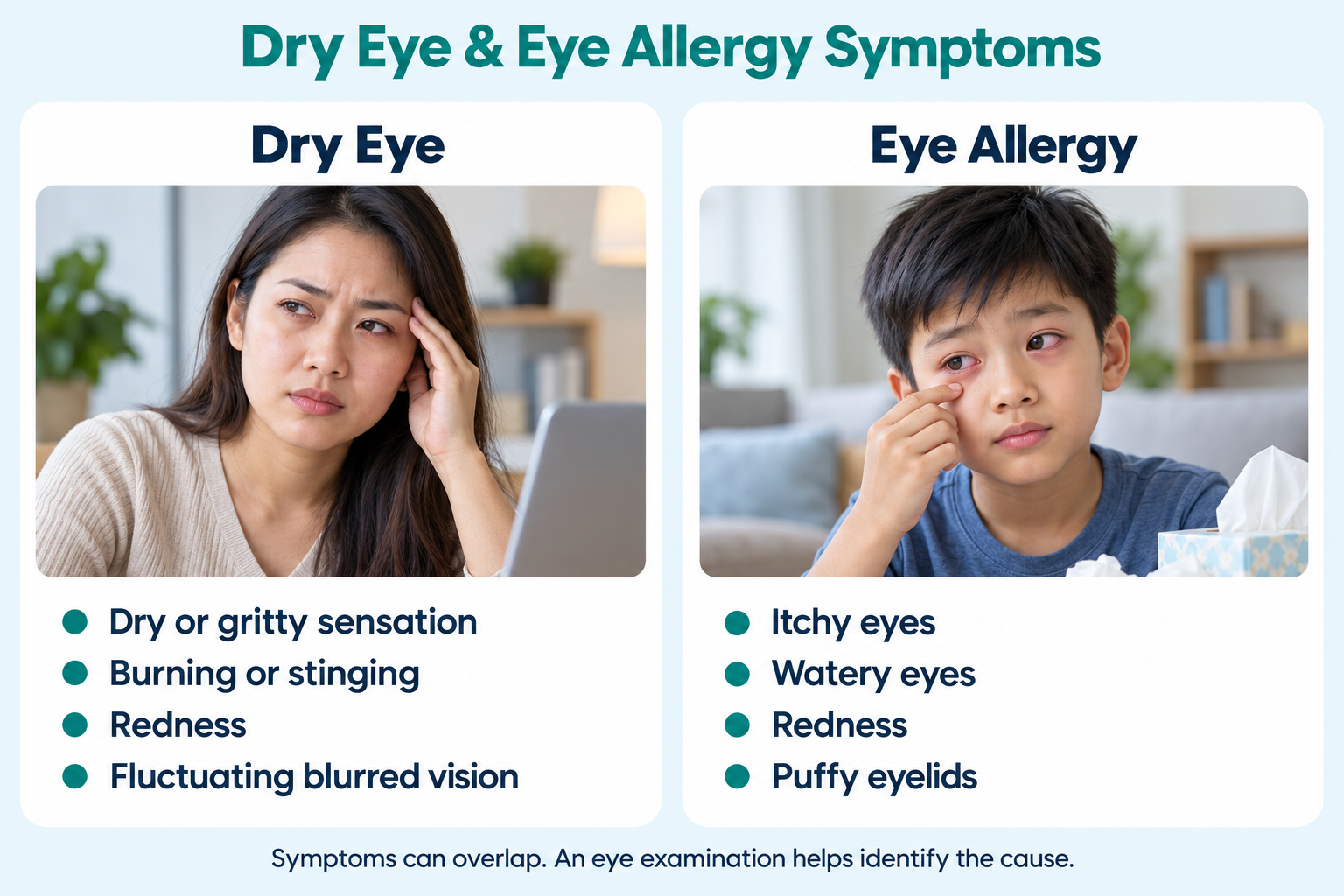
Persistent dryness, burning, grittiness, redness or fluctuating blurred vision may indicate dry eye disease. Eye allergies commonly cause itching, watering and eyelid swelling, sometimes with frequent eye rubbing.
These symptoms can overlap with other eye conditions. An examination can help identify the cause and guide appropriate treatment, particularly when symptoms keep returning or interfere with daily activities.
Dry Eye Care
Treatment may include lubricating eye drops, eyelid hygiene and warm compresses when oil gland blockage is present. Prescription eye drops may be recommended to control inflammation in selected patients.
Eye Allergy Care
Treatment may include anti-allergy eye drops, lubricants and measures to reduce exposure to triggers such as dust or pet dander. More severe allergic eye disease may require additional prescription treatment and closer monitoring.
Your treatment plan will depend on the cause and severity of your symptoms. Use steroid eye drops only when prescribed and monitored by your eye doctor.
Avoid rubbing your eyes, take regular breaks during screen use and blink fully and frequently. Reduce direct exposure to fans, air conditioning, smoke and dust. For itchy eyes, a cool compress may help relieve discomfort.
Use your prescribed treatment consistently and attend follow-up appointments to assess your response. Long-term or recurring symptoms may require ongoing care and adjustments to treatment.
Seek prompt eye assessment if you develop significant pain, marked sensitivity to light or reduced vision.