
Understanding Diabetic Retinopathy
Learn about diabetic retinopathy, retinal screening and available treatment options with Dr Nor Diyana at Pantai Hospital Klang, Selangor.
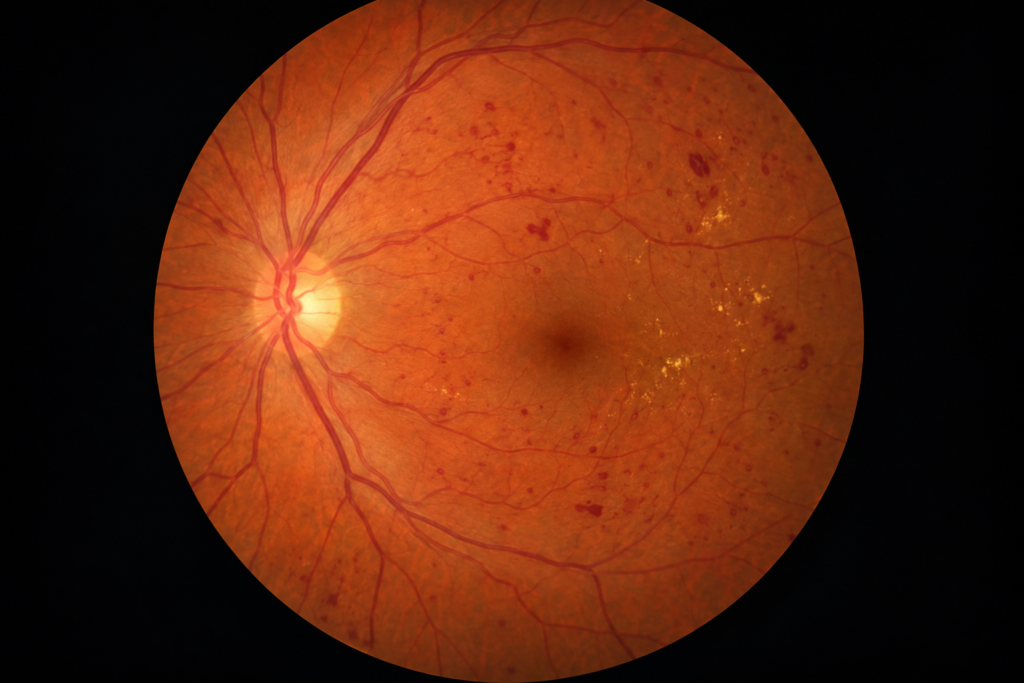
What Is Diabetic Retinopathy?
Diabetic Retinopathy Symptoms
Diabetic retinopathy often has no symptoms in its early stages. As the condition progresses, symptoms may include:
• Blurred or fluctuating vision
• Dark spots or floating strands in your vision
• Dark or missing areas in your vision
• Difficulty seeing clearly when reading
• Reduced vision or sudden loss of vision
Seek urgent eye assessment if you develop sudden new floaters, a sudden drop in vision or a curtain-like shadow across your vision.
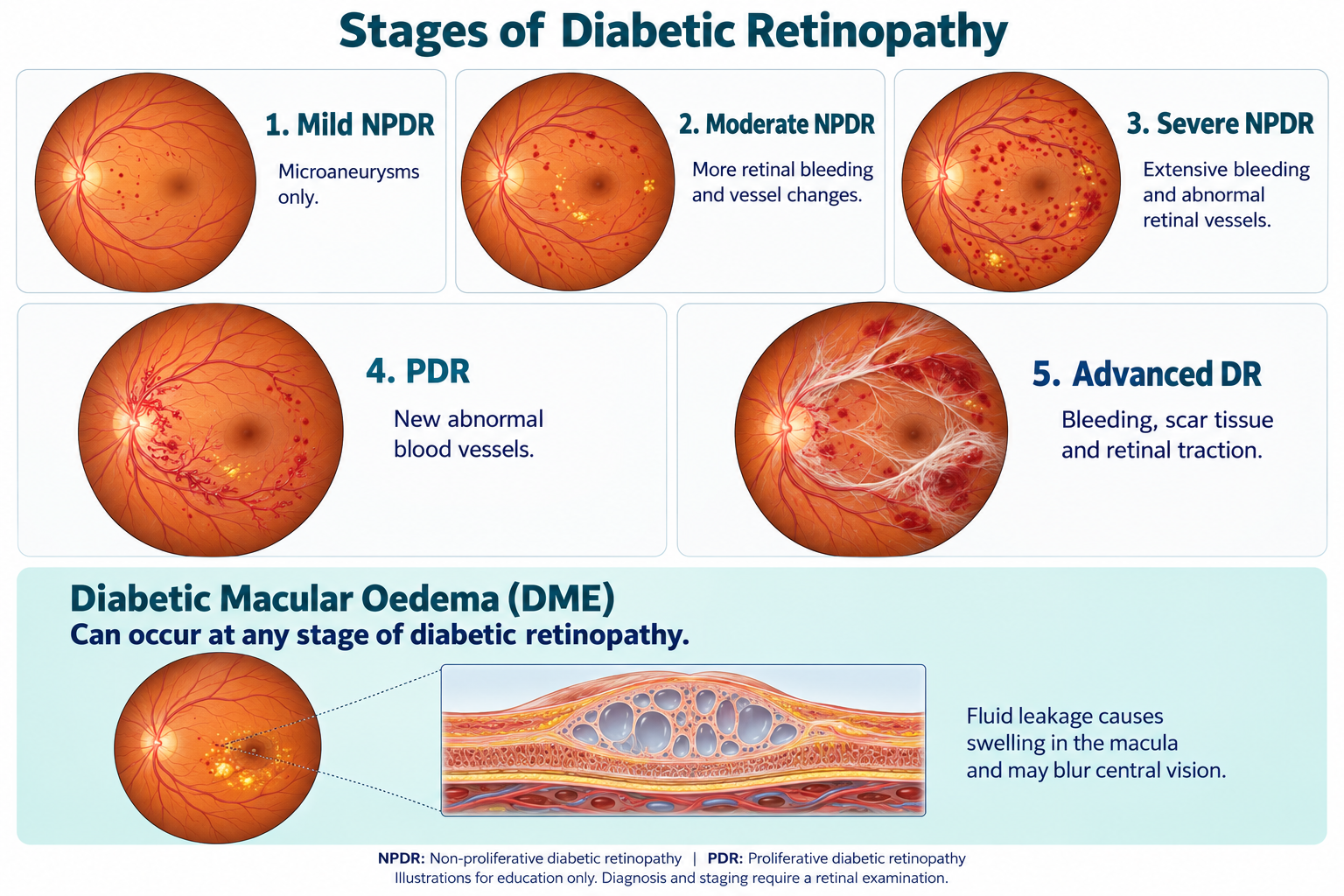
Diabetic retinopathy occurs when diabetes damages the small blood vessels in the retina, the light-sensitive layer at the back of the eye. These vessels may leak or become blocked. In advanced stages, abnormal new blood vessels can develop and bleed, threatening vision.
The condition often has no symptoms in its early stages. Regular retinal examinations are important, even when vision feels normal. Fluid leakage can also cause swelling in the macula, known as diabetic macular oedema, which can affect central vision.
How Is Diabetic Retinopathy Treated?
Treatment depends on the stage of diabetic retinopathy and whether the macula is affected. Early stages may require monitoring alongside good control of blood sugar, blood pressure and cholesterol.
Depending on the findings, treatment may include injections into the eye, retinal laser treatment or surgery. Regular follow-up is important to monitor changes and guide treatment to help protect vision.