
Laser Eye Treatment
Dr Nor Diyana provides retinal laser treatment (pan-retinal photocoagulation and focal/grid laser), YAG laser capsulotomy and laser peripheral iridotomy at Pantai Hospital Klang, Selangor. Treatment is recommended following a thorough assessment of your eye condition and visual needs.
Types of Laser Eye Treatment
What to Expect During Treatment
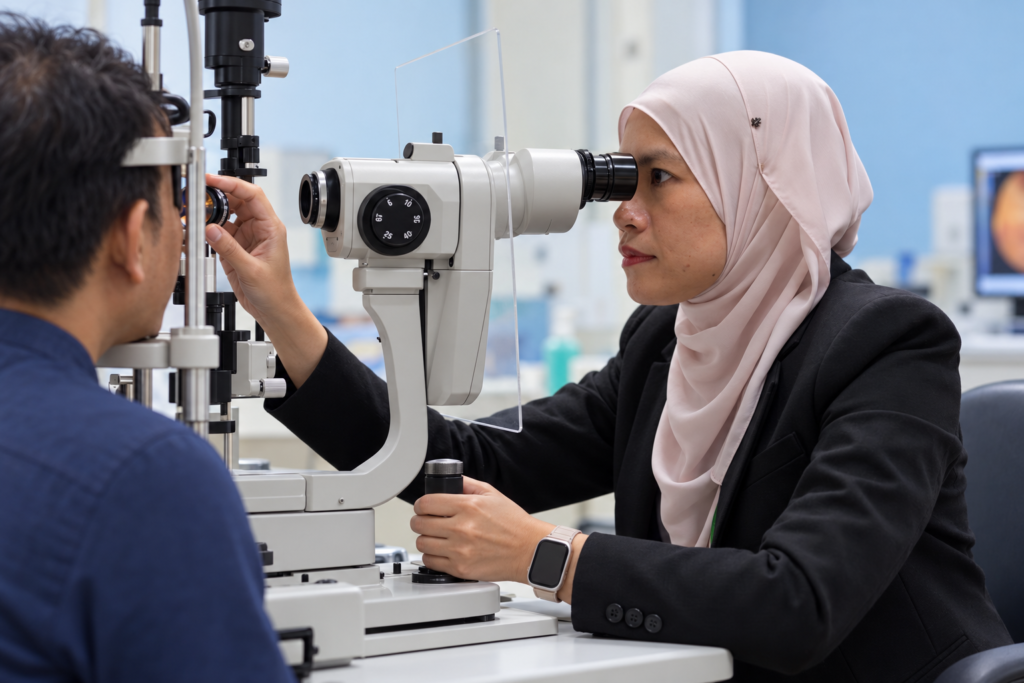
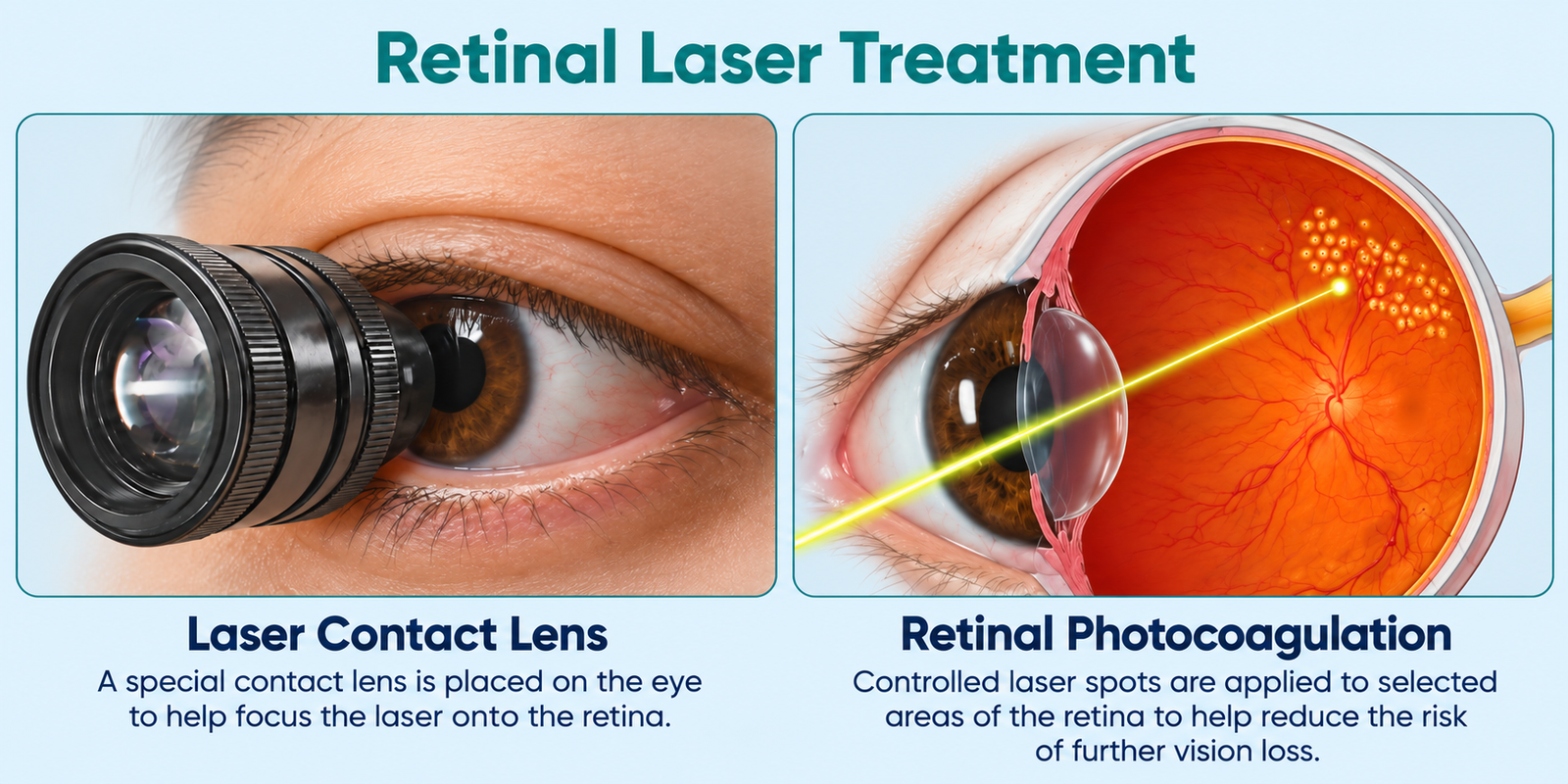
Laser treatment is usually performed while you are seated at a laser machine. Numbing eye drops are applied, and a special contact lens may be placed on your eye to help focus the laser.
You may notice bright flashes, clicking sounds or brief stinging sensations, depending on the procedure. Treatment duration varies, and retinal laser may require more than one session. Dr Nor Diyana will explain the expected benefits, risks and treatment plan beforehand.
Retinal Laser Treatment
Pan-retinal photocoagulation (PRP) helps reduce the risk of vision loss from abnormal retinal blood vessels, particularly in proliferative diabetic retinopathy. Focal/grid laser may be used in selected cases to treat leaking blood vessels and reduce retinal swelling.
YAG Laser Capsulotomy
This treatment creates a clear opening in the cloudy capsule behind an intraocular lens following cataract surgery, helping improve vision affected by posterior capsule opacification.
Laser Peripheral Iridotomy
A small opening is created in the outer part of the iris to improve fluid movement within the eye. This may be recommended to treat or reduce the risk of angle closure in suitable patients.
Please bring your current glasses, a list of medications and any previous eye reports. Continue your usual medications and eye drops unless advised otherwise.
Depending on the procedure, eye drops may be used to adjust your pupil size and prepare your eye for treatment. Your vision may be temporarily blurred or sensitive to light afterwards, so bring sunglasses and arrange someone to drive you home.
Dr Nor Diyana will explain the benefits and limitations of each suitable lens, including possible glare or halos. Glasses may still be needed for some activities after surgery.
Temporary blurred vision, light sensitivity or mild discomfort may occur after treatment. You may be prescribed eye drops, and your eye pressure may be checked before you leave.
Follow-up appointments allow Dr Nor Diyana to assess your response and determine whether further treatment is needed. Follow the instructions given for your specific procedure and avoid driving on the day of treatment.
Seek urgent eye care if you develop severe or worsening pain, increasing redness, a sudden reduction in vision, new flashes or a sudden increase in floaters.